Hard Hat Colour Codes in Kenya: What Safety Helmet Colours Mean on Construction Sites
If you’ve ever walked onto a busy construction site and wondered why some people wear white helmets, others wear yellow, and visitors wear grey, you’re not alone. Hard hat colour coding is a simple site-control system that helps teams quickly identify roles, responsibilities, and where to get help—especially in emergencies.
The challenge: helmet colour meanings aren’t globally “fixed.” Different countries, contractors, and projects use different systems. Some follow a traditional 7-colour scheme, while others prefer a simplified 4-colour scheme (plus stickers) to reduce confusion. (NBS)
This guide explains the most common colour meanings, then shows the best way to implement a clear, Kenya-friendly system you can actually enforce on real sites.
Looking for compliant helmets locally? Browse Safety Helmets & Headlamps in Kenya or the full Head Protection Gear category.
Understanding Hard Hat Colour Codes in Kenya
On a live site, colour coding helps with:
Faster communication: You can find the right person faster (supervisor, technician, safety, or visitor support).
Emergency response: Easier to spot first-aid support and fire marshals (often identified by stickers).
Access control: Visitors/inexperienced personnel are clearly identifiable and can be kept out of high-risk zones.
Traffic & roadside safety: Some systems use high-visibility colours to improve visibility for motorists—pair them with Reflective Safety Vests for maximum visibility.
Is there an “official” hard hat colour standard?
In many places (including Kenya), hard hat colour codes are a site policy, not a universal law.
However, the UK construction industry (via Build UK members) promoted a simplified helmet colour scheme from 2017 onwards (white/black/orange/blue, plus stickers).
Also note: some organisations set their own rules (e.g., some sites restrict colours), so your site induction must clearly state your policy. (High Speed Training Limited)
Bottom line for Kenya: choose one clear system, publish it, and enforce it consistently (including contractors and visitors).
The traditional 7-colour hard hat system (common on many sites)
This is the older, widely recognised system many contractors still use because it maps colours to trades/roles.
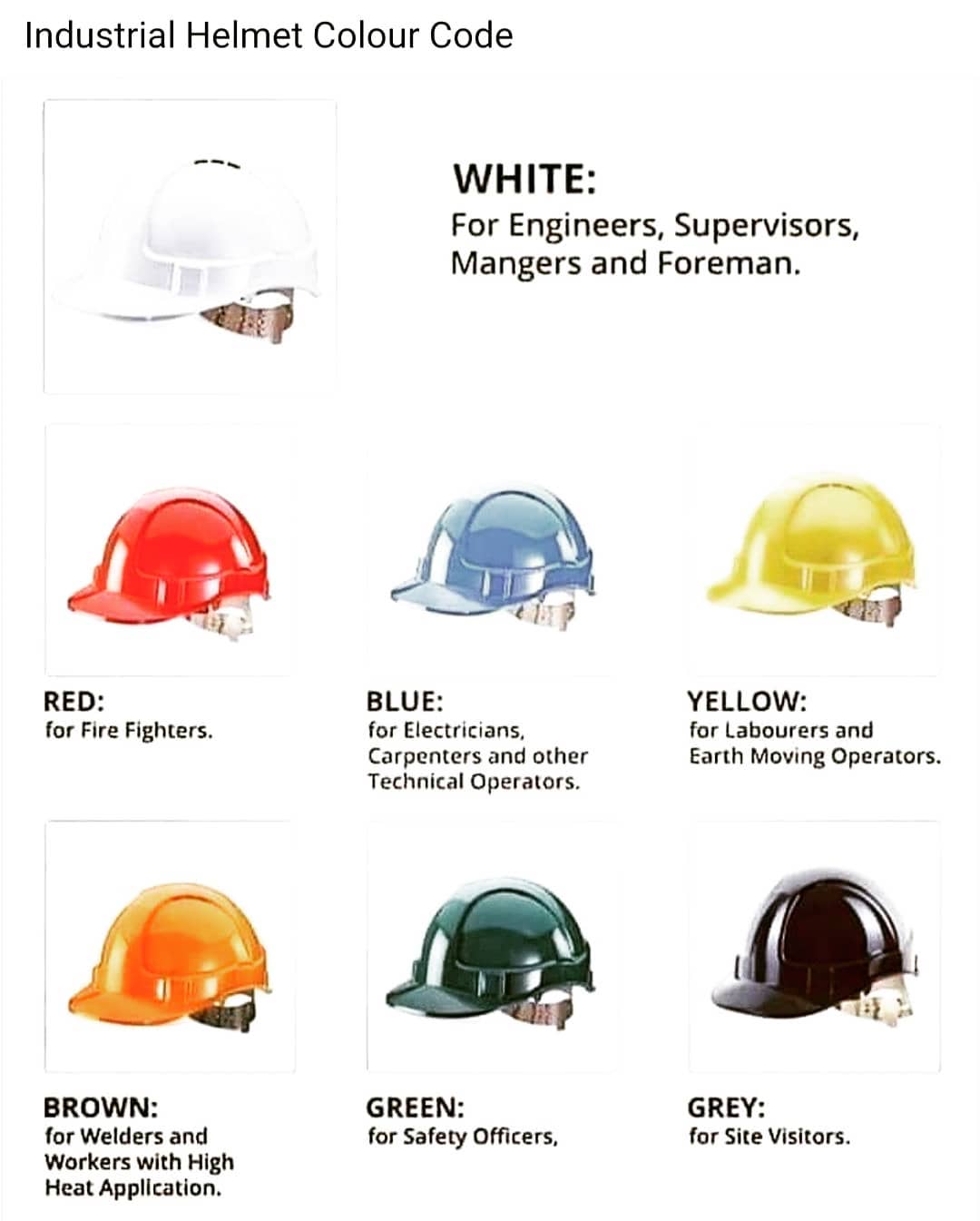
Hard hat colour code system
| Helmet colour | Typical meaning | Common Kenya site use (practical) |
|---|---|---|
| White | Managers, foremen, engineers, supervisors | Project engineers, site managers, client reps |
| Yellow | General labourers, operators | Masons, casual labour, plant support teams |
| Blue | Technical roles (electricians, carpenters, technicians) | Electricians, fitters, installers, maintenance techs |
| Green | Safety staff/inspectors, sometimes trainees | HSE officers, safety marshals, trainees/learners |
| Brown | High-heat work (welders) | Welding bays, fabrication yards |
| Orange | Road crews / high-visibility tasks | Road works, flagging/traffic interface zones |
| Grey | Visitors | Audits, client visitors, deliveries (escorted) |
| Red (often used) | Fire/emergency roles | Fire marshals/emergency response (site-defined) |
Notice how this system is easy to “understand”, but can be harder to enforce when you have many contractors with different internal rules.
The simplified “4 colours + stickers” system (easy to enforce)
Many sites prefer this because it reduces the number of colours people must remember. Common meanings:
White: Site managers / competent operatives/vehicle marshals (often distinguished further by hi-vis).
Black: Site supervisors.
Orange: Slingers/signallers (lifting operations).
Blue: Everyone else / visitors / apprentices / inexperienced personnel (site-defined).
Green sticker: First aider identification.
Red sticker: Fire marshal identification.
Why this works well in Kenya: it’s simpler for multi-contractor projects where different trades rotate frequently.
Best-practice hard hat colour coding for Kenya sites (recommended policy)
If your goal is clarity + easy enforcement, here’s a Kenya-friendly policy that works on construction, maintenance, warehouses, and fabrication yards:
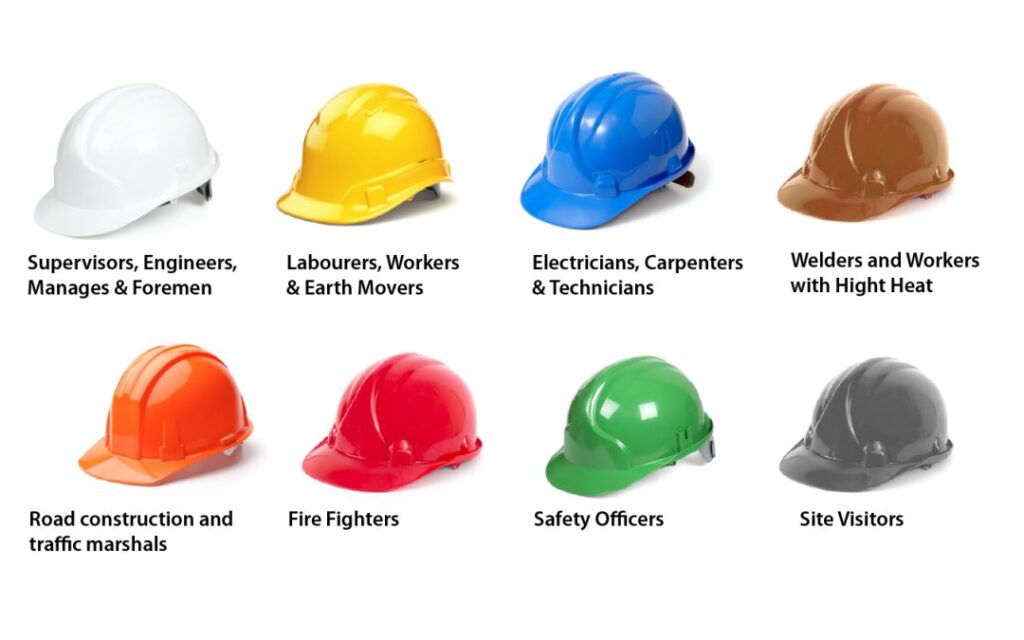
Recommended “Kenya site” colour code (simple + familiar)
| Helmet colour | Assign to | Why it’s practical |
|---|---|---|
| White | Management + Engineers + Supervisors | Clear leadership visibility (fast escalation) |
| Yellow | General workforce + operators | The most common stock colour is easy to replace |
| Blue | Electricians + technical teams | Helps keep people away from live-work zones |
| Green | Safety / HSE + trainees (optional split) | If you can’t split, use green stickers for trainees |
| Grey | Visitors | Visitor control and escort enforcement |
| Red sticker | Fire marshal | Stickers avoid buying special helmet colours |
| Green sticker | First aider | Easy to identify across all colours |
This preserves the trade visibility of the traditional scheme while still allowing you to use stickers to avoid overcomplicating the purchasing process.
How to implement helmet colour coding on a real site (step-by-step)
1) Put the policy in your induction (don’t assume people “know”)
Add a 1-page “Helmet Colour Code” section to your site induction pack and toolbox talks:
Colour = role
Where visitors can go / cannot go
Who must escort visitors
What stickers mean (first aider/fire marshal)
This reduces “but on our other site…” arguments.
2) Control issuance (avoid random helmet colours from contractors)
If contractors bring mixed colours:
Issue site helmets at the gate/store, or
Allow personal helmets only if they match your code, or
Use site-coded stickers large enough to identify the role at a distance.
3) Use stickers for roles that change often
First aiders and fire marshals can change shifts. Stickers keep the system stable.
4) Back up colours with hi-vis vests (especially for traffic/marshalling)
Helmet colours help, but hi-vis role markings (e.g., “SUPERVISOR”, “FIRST AID”) make identification faster in dust, rain, or low light.
Use the right vest class for the task—see Class 1 vs Class 2 vs Class 3 Safety Vests in Kenya.
5) Post a helmet colour chart at:
Site entrance/security gate
Stores issue point
Welfare area (canteen)
Main noticeboard
6) Review quarterly (sites evolve)
As headcount grows, you may need to split “technical” into subgroups (e.g., electricians vs installers). Keep the system simple unless complexity truly improves safety.
Buying guide: choosing the right hard hat colour (and what matters more than colour)
Colour coding helps with organisation—but protection and comfort come first.
When buying helmets in Kenya, prioritise:
A recognised safety standard such as EN 397 and/or ANSI Z89.1 (spec depends on your site requirements).
The right material (ABS vs HDPE vs others) based on impact, heat, and site conditions—see Material Types Used for Hard Hats.
A comfortable suspension system (e.g., 6-point or 8-point) for long shifts—comfort improves compliance.
Practical tip for Kenya procurement
If you struggle with compliance, buy helmets with:
Ratchet suspension
Sweatband
Optional chin strap for working at height (and pair with proper fall protection, such as a full body safety harness)
Optional ventilation for hot day use
People wear what feels comfortable—comfort is safety.
Example: what to stock for a complete site helmet system
A strong “site-ready” stock plan looks like this:
White helmets for managers/engineers/supervisors (e.g., White Vaultex Helmets)
Yellow helmets for the general workforce
Blue helmets for technical teams
Grey helmets for visitors/audits
First aider + fire marshal stickers in bulk
Optional: custom printed helmets (company logo + role text) for stronger control—see Custom Printed Safety Helmets
If you want a ready local reference for helmet options and head protection in Kenya, start here: Safety Helmets & Headlamps in Kenya.
FAQs
1) What do hard hat colours mean in Kenya?
In Kenya, colour meanings are usually site-defined. Many projects use the traditional 7-colour scheme (white/yellow/blue/green/brown/orange/grey) or a simplified 4-colour scheme plus stickers.
2) Is there a universal standard for hard hat colour codes?
No universal global standard. Some industries/countries promote a recommended scheme (e.g., the UK’s Build UK member guidance), but sites can adopt their own rules.
3) What colour is for site visitors?
Many systems use grey for visitors, while some simplified systems treat visitors under “blue” (visitors/inexperienced persons). Your induction should specify it clearly.
4) What colour do safety officers wear?
Green is often used for safety/HSE or inspectors (site-dependent).
5) What colour do electricians wear?
Many traditional systems use blue for electricians and technical operators.
6) What colour is for supervisors and managers?
Commonly white for managers/engineers/senior staff; some simplified systems separate black for supervisors.
7) How do you identify first aiders and fire marshals on site?
A common method is to use stickers: green for first aiders and red for fire marshals (even if the helmet colour is different).
8) Which matters more—helmet colour or helmet standard?
The helmet standard and fit matter more for safety (e.g., EN 397 / ANSI Z89.1 depending on site requirements). Colour coding mainly improves organisation and emergency response.
Quick helmet colour code notice (for your site board)
SAFETY HELMET COLOUR CODES (SITE POLICY)
White: Management / Engineers / Supervisors
Yellow: General workforce/operators
Blue: Technical teams (e.g., electricians, installers)
Green: Safety/HSE (and trainees if assigned)
Grey: Visitors (must be escorted)
Green sticker: First aider
Red sticker: Fire marshal
Read Next


Product Gallery
Featured Products
-
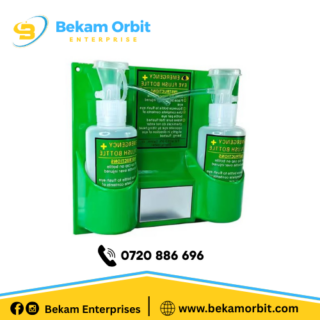
 wall-mounted with 1000 ml bottles emergency eye wash station
KSh9,000.00
wall-mounted with 1000 ml bottles emergency eye wash station
KSh9,000.00 -
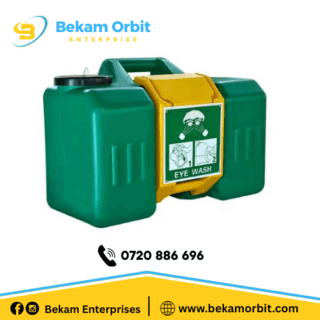
9-Gallon Gravity-Flow Portable Eye Wash Station
KSh17,000.00
-
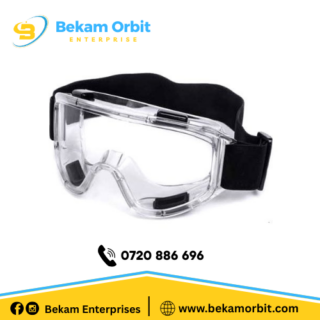
Lab Safety Goggles
KSh400.00
-
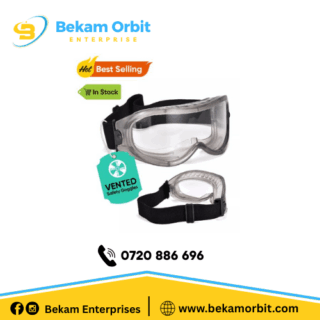
Over Glasses Safety Goggles
KSh700.00
-
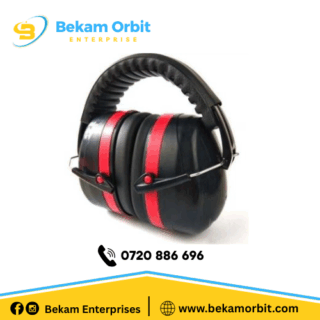
Safety Noise Cancelling Earmuffs
KSh1,300.00
-
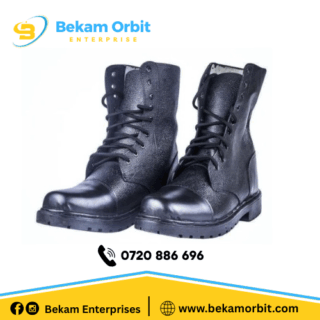
Askari Security Boots
KSh1,800.00
-
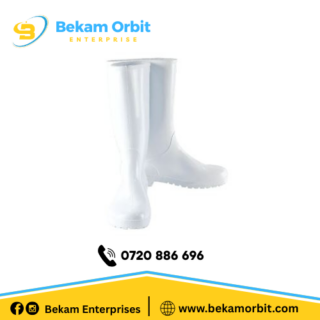
White light duty gumboots
KSh800.00
-
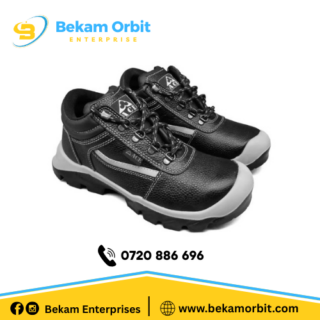
Ace Duma Safety Shoes
KSh3,100.00